Physical Address
304 North Cardinal St.
Dorchester Center, MA 02124
Physical Address
304 North Cardinal St.
Dorchester Center, MA 02124

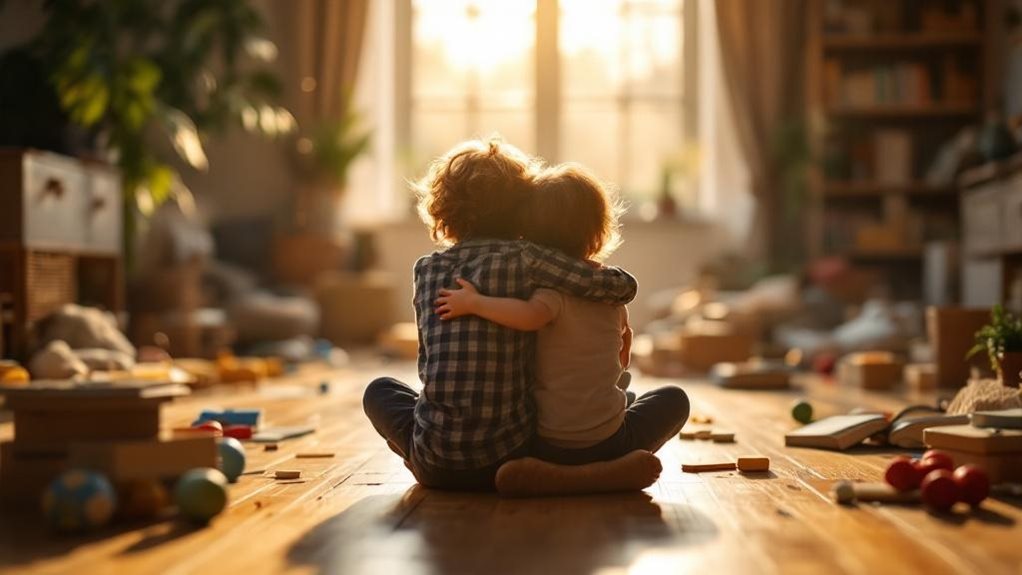
Growing up with a defiant sibling creates hidden wounds that most parents miss—discover these seven life-changing strategies that heal families.
You can protect your non-defiant children by creating safe emotional spaces where they’re heard without judgment, establishing professional sibling support groups for shared experiences, and implementing family therapy to improve communication patterns. Teach conflict resolution skills, provide individual counseling to process trauma, foster positive interactions through structured activities like cooperative games, and develop their emotional intelligence with coping strategies. These evidence-based approaches address the complex emotions siblings experience and build long-term resilience in challenging family dynamics.
When your child exhibits defiant behavior, their siblings often experience a whirlwind of emotions—from anger and resentment to confusion and guilt—yet these feelings frequently go unacknowledged in the family’s focus on managing the crisis at hand.
You must prioritize creating dedicated spaces where siblings can safely engage in emotional expression without fear of judgment. Implement validation techniques like active listening and empathetic responses that acknowledge their experiences as legitimate and important. Schedule regular one-on-one check-ins to provide consistent support, and establish private communication channels where they can share concerns freely.
Involve your entire family in fostering this supportive environment by educating everyone about the importance of emotional openness. Research shows that nearly half of children in mental health services have siblings experiencing their own emotional difficulties, making validation and support even more critical for family stability. When siblings feel heard and validated, they’re better equipped to navigate the complex dynamics of living with a defiant child.
While creating safe spaces within your home provides essential emotional support, professional sibling support groups offer structured therapeutic environments that you can’t replicate on your own. Licensed facilitators with specialized training in childhood behavioral disorders guide discussions, ensuring they remain constructive and therapeutic while preventing potential harm.
These groups validate siblings’ complex emotions through shared experiences, reducing isolation and building significant social skills. Professional-led sessions incorporate psychoeducation about conditions like ODD, helping siblings understand their family dynamics better. Through role-playing, art therapy, and guided discussions, children develop effective communication strategies and coping mechanisms.
The group dynamics foster peer empathy and sibling empowerment, as participants realize they’re not alone in their struggles. Regular attendance builds emotional resilience while early intervention prevents secondary mental health issues from developing. Since early intervention is crucial for managing symptoms in families affected by behavioral disorders, these support groups can address sibling needs before they escalate into more serious concerns.
When your family struggles with a defiant child, implementing family therapy can transform how everyone relates to each other and manages conflict. You’ll discover that family therapy offers proven benefits like improved communication skills, stronger sibling bonds, and effective conflict resolution strategies that address the root causes of family tension. Nearly 90% report improved emotional health following family therapy sessions. Choosing the right therapist who understands defiant behavior and sibling dynamics becomes essential for creating lasting positive changes in your family’s daily interactions.
Although managing a defiant child often feels overwhelming, family therapy offers a proven pathway to transform your household dynamics and support every family member, including siblings who frequently bear the brunt of ongoing conflicts. Research shows that 98% of families report good or excellent outcomes from family therapy, with 65% experiencing significant reductions in defiant behavior.
You’ll discover how family therapy addresses underlying family roles and reshapes unhealthy communication patterns that perpetuate conflict. Through systemic interventions, your family can develop effective conflict resolution strategies while strengthening emotional bonds between siblings. The process enhances parenting effectiveness, improves family cohesion, and creates positive interactions that reward all children. Most importantly, siblings receive vital emotional support and learn coping strategies to navigate their challenging family environment more successfully.
Finding the right therapist can make the difference between transformative family healing and frustrating sessions that drain your time and energy. When exploring family therapy options, prioritize therapists with master’s degrees and at least two years of supervised clinical experience treating ODD. Therapist compatibility matters enormously—you’ll need someone whose communication style engages your entire family effectively.
| Qualification | Minimum Requirement | Why It Matters |
|---|---|---|
| Education | Master’s degree | Professional competency foundation |
| Experience | 2+ years supervised clinical | Proven treatment expertise |
| ODD Specialization | Direct family treatment experience | Understanding of defiant behaviors |
| Approach | Family-based interventions | Addresses whole-family dynamics |
| Availability | Regular session scheduling | Guarantees consistent progress |
Seek referrals from healthcare providers or families with similar experiences. The right therapist will assess family dynamics, collaborate with teachers, and provide ongoing support while adapting strategies to your family’s evolving needs.
Since siblings of defiant children often bear the brunt of household tension and conflict, equipping them with strong communication skills and conflict resolution abilities becomes essential for their emotional well-being and family harmony.
Teaching siblings effective communication and conflict resolution skills protects their emotional well-being while strengthening overall family harmony during challenging times.
Start by teaching structured problem-solving steps: identify the specific issue, brainstorm solutions together without criticism, evaluate options for fairness, agree on one approach, and review outcomes. Establish clear rules prohibiting name-calling or aggression while ensuring each child shares their perspective uninterrupted.
Focus on recognizing positive interactions rather than reinforcing negative behaviors. Teach negotiation concepts where each sibling gives something to receive something. Practice “I” statements, paraphrasing, and compromise techniques through role-play scenarios.
Model respectful conflict resolution daily and use “Stop, Think, Act” strategies, reinforcing these skills through consistent practice and positive feedback.
While teaching communication skills helps siblings navigate daily conflicts, some children need deeper support to heal from the emotional wounds that accumulate from living in chronic household stress. Individual counseling provides a confidential space where siblings can process emotional trauma without judgment or family dynamics interfering.
Cognitive-behavioral therapy proves particularly effective in helping these children develop emotional regulation skills and healthy coping strategies. Mental health professionals understand the unique challenges siblings face, from experiencing empathy to resentment toward their defiant brother or sister. Early therapeutic intervention prevents long-term psychological effects that can persist into adulthood.
You’ll find that individual counseling builds resilience while addressing the complex emotions siblings carry. This targeted support complements family therapy, ensuring each child receives the specific attention they need to thrive despite challenging circumstances.
You can strengthen the bond between your children by implementing structured activities that encourage positive cooperation rather than competition. Regular family game nights, collaborative art projects, and dedicated weekly bonding sessions provide predictable opportunities for siblings to connect in low-pressure environments. These structured interactions help counteract the stress and tension that often builds up in families where one child displays defiant behaviors.
When siblings face the ongoing challenges of living with a defiant child, structured family games create essential opportunities for positive interaction and emotional healing. Your thoughtful family game selection can transform tense household dynamics into moments of cooperation and joy. Choose cooperative games like Forbidden Island that encourage teamwork rather than competition, helping siblings work toward common goals together.
Consider necessary game rule adjustments to guarantee everyone can participate successfully. Modify complex rules for younger children or create alternative winning conditions that celebrate effort over outcomes. These adaptations build confidence and reduce frustration.
Collaborative art projects offer another powerful avenue for building positive connections between siblings in households with defiant children. These shared creative experiences help siblings develop essential teamwork skills while providing constructive outlets for emotional expression.
Consider initiating a collaborative mural where siblings contribute different sections, or guide them through creating a joint sculpture that combines their individual artistic strengths. These activities naturally encourage active listening, negotiation, and creative problem-solving.
| Benefit | Art Activity | Skill Developed |
|---|---|---|
| Communication | Collaborative mural | Active listening |
| Conflict resolution | Joint sculpture | Negotiation |
| Emotional intelligence | Shared painting | Empathy |
| Unity building | Group collage | Cooperation |
| Creative bonding | Mixed media project | Trust |
Through artistic collaboration, you’re creating safe spaces where siblings can express themselves freely, resolve differences constructively, and build lasting positive memories together.
While creative activities build immediate connections between siblings, establishing consistent weekly bonding time creates the structured foundation necessary for lasting positive relationships. You’ll find that predictable bonding rituals reduce anxiety and help siblings anticipate positive experiences together, countering the effects of defiant behavior on family dynamics.
Creating effective activity schedules requires selecting varied experiences that engage all children while promoting cooperation. You should maintain non-intrusive supervision, allowing siblings to develop independent problem-solving skills while ensuring positive interactions remain the focus.
Consider these weekly bonding opportunities:
Although siblings of defiant children often struggle with complex emotions they can’t fully understand or express, developing their emotional intelligence becomes an essential foundation for long-term resilience. You’ll need to help them recognize and label their feelings while teaching empathy for their defiant sibling’s struggles. Model high emotional intelligence yourself, demonstrating how to regulate emotions during challenging moments.
Effective coping strategies include teaching problem-solving skills to manage daily stress and introducing mindfulness practices like deep breathing exercises. You can strengthen their communication abilities so they’ll express needs clearly rather than bottling up frustration. Building support networks through friends or extended family provides additional outlets, while encouraging hobbies offers healthy stress relief and mood improvement opportunities.